

How to read an extra virgin olive oil label
Origin, “cold extracted”, fruitiness, acidity, harvest year: what each wording means under EU rules, and which ones may only be used under certain conditions.
23 October 2026
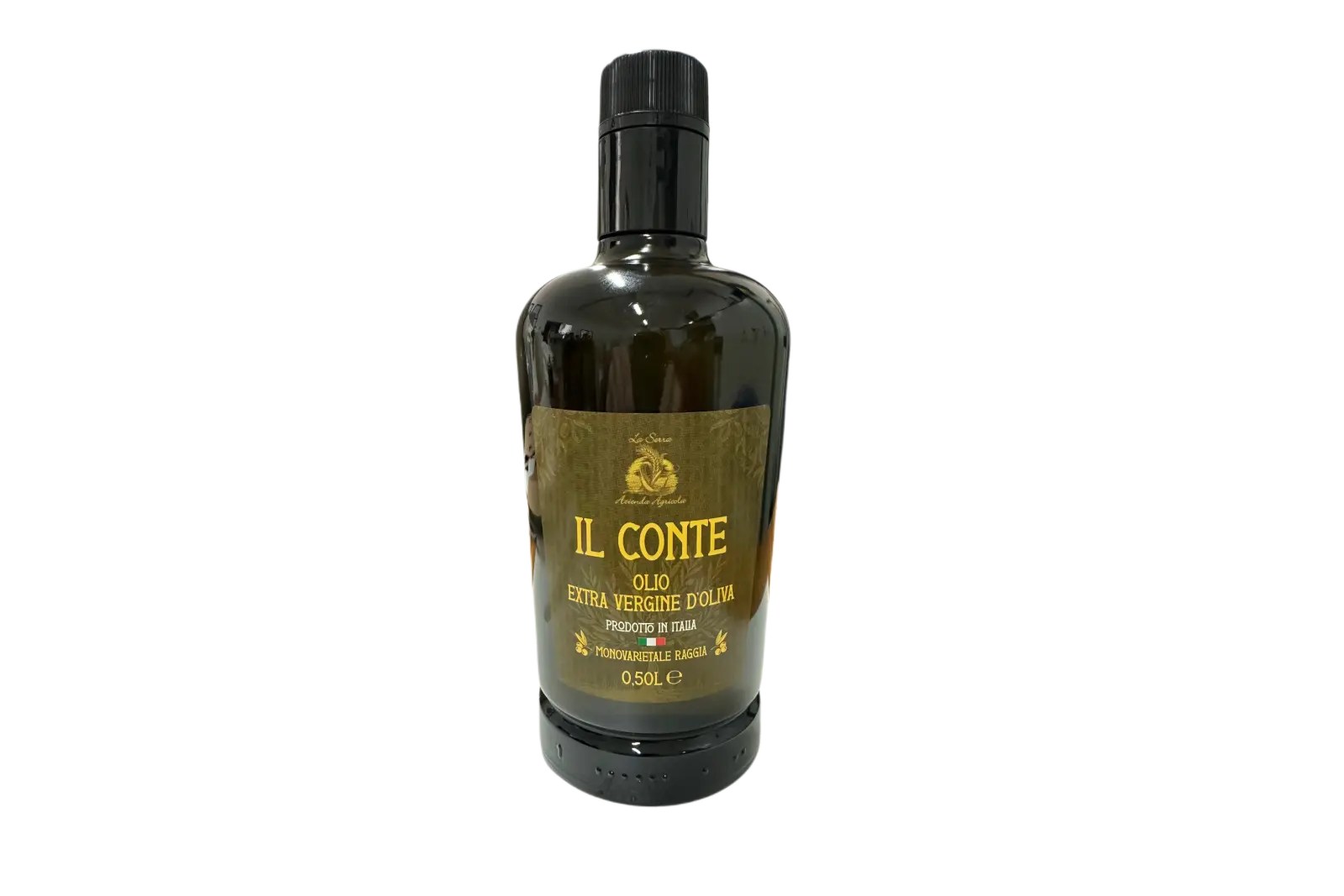
An extra virgin olive oil label cannot say whatever it likes: the wording is governed by Delegated Regulation (EU) 2022/2104, the same across the European Union. Some indications are mandatory, others optional but allowed only under precise conditions. Here is how to read them.
Mandatory indications
- The category. “Extra virgin olive oil”, together with a fixed sentence required by law: “superior category olive oil obtained directly from olives and solely by mechanical means”.
- The origin. For extra virgin oil it is mandatory and must appear in the same field of vision as the category. It names the country where the olives were harvested and where the mill is. If the oil comes from several countries, the label says for example “blend of olive oils of European Union origin”; if the olives were harvested in one country and milled in another, it must say so.
- Storage. The label must tell you to keep the oil away from light and heat.
- What applies to every food: quantity, best-before date, lot, name and address of the business responsible.
Olive oil is sold to consumers pre-packed, in containers of up to 5 litres, with a closure that breaks on first opening (for restaurants and canteens, each country may allow larger containers).
“First cold pressing” and “cold extracted”
They are two different wordings, both reserved for oils obtained below 27 °C. “First cold pressing” is only for oil extracted with traditional hydraulic presses; “cold extracted” is for oil obtained by centrifugation or percolation, which is how most modern mills work. Neither is mandatory.
Fruity, bitter, pungent
Words about taste and aroma may only be used for virgin and extra virgin oils, and only if based on an assessment by a tasting panel using the official method. The intensities have a precise meaning too: “light”, “medium” and “intense” match scores set by the regulation, and so do “green fruitiness”, “ripe fruitiness”, “well balanced oil” and “mild oil”.
Acidity
Extra virgin oil must have an acidity of no more than 0.8%. A producer may print the maximum acidity on the label, but only if the peroxide value, the wax content and the ultraviolet absorption are shown in the same field of vision, in the same size of type: one number on its own is not allowed. These values measure how fresh and sound the oil is.
Harvest year
The harvest year is optional, but it may only be shown if 100% of the oil in the bottle comes from that harvest: as a marketing year (for example “2026/2027”) or as the month and year of extraction. It is the most useful clue to how fresh an oil is, because aromas fade over the months: read more in new olive oil, what it is.
PDO and PGI
Instead of the country, the origin may be a protected designation of origin or a protected geographical indication, with its own specification and checks.
What the label does not tell you
The label says what is in the bottle, not how it was kept afterwards. To recognise a good extra virgin oil by tasting, read how to recognise quality extra virgin olive oil; to make it last, how to store extra virgin olive oil.
Source: Delegated Regulation (EU) 2022/2104, Articles 4–11 and Annexes I and II, on EUR-Lex.