

How extra virgin olive oil is made, from olive to bottle
Harvest, crushing, malaxing, extraction: the steps that turn olives into extra virgin olive oil, and why speed and temperature matter so much.
23 October 2026
Extra virgin olive oil is, at heart, a fruit juice: it is obtained from olives by mechanical means only, with no solvents or chemical treatments. But there are several steps between the tree and the bottle, and the quality depends on each one.
1. The harvest
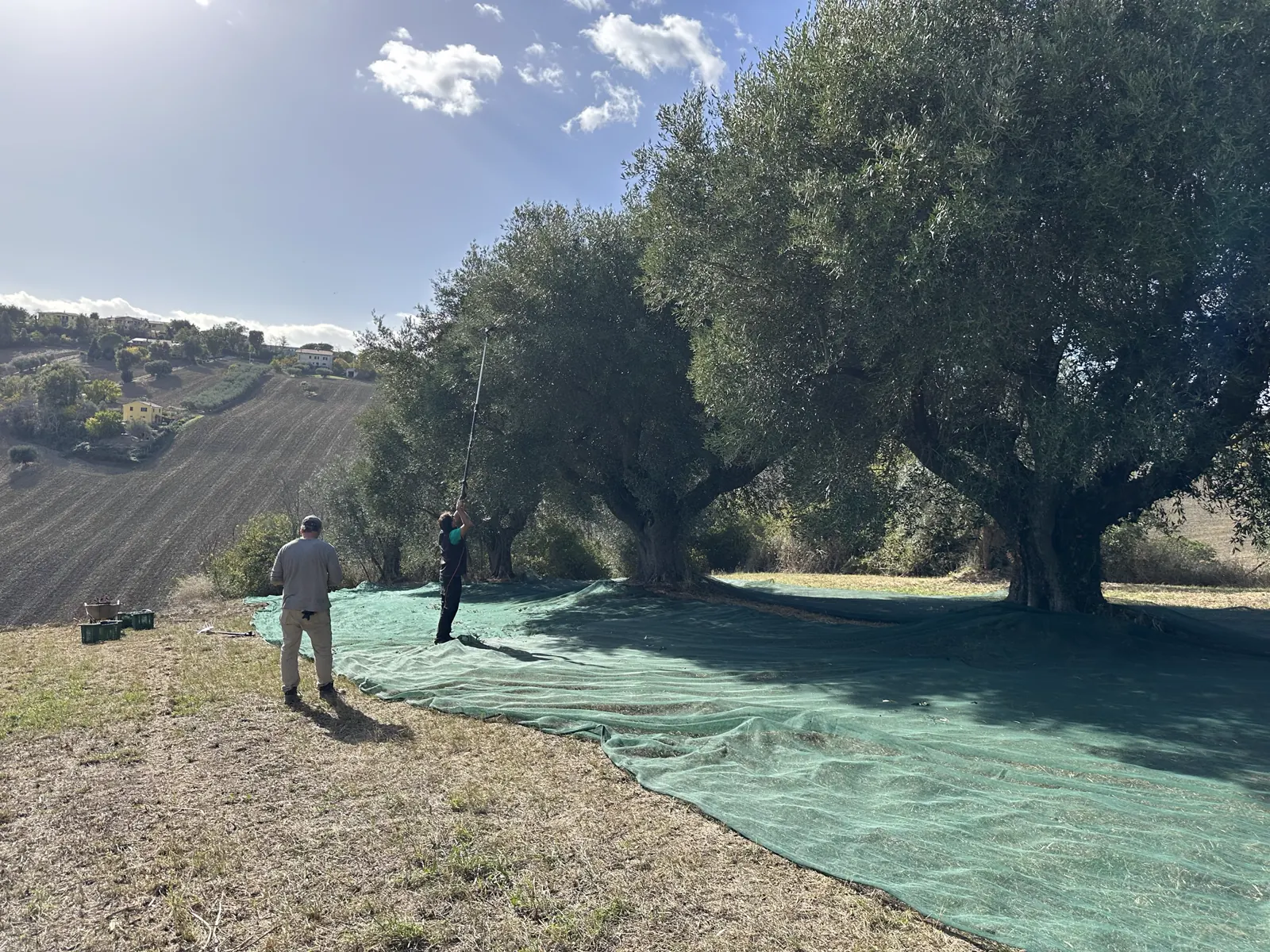
In Italy olives are picked in autumn, usually from mid-October to December. They are picked by hand or with harvesting combs that shake the branches, and fall onto large nets spread under the trees, as in the photo above of our olive groves. Then they go into crates with holes that let the air through.
2. To the mill, quickly
From the moment they are picked, olives start to deteriorate: piled up and warm, they ferment and the oil picks up defects. That is why they must reach the mill quickly, within a day or two at most.
3. Cleaning and crushing
At the mill the olives are separated from leaves and twigs and washed. Then they are crushed, stones and all: with traditional stone mills or, in most modern mills, with metal crushers. The result is an olive paste.
4. Malaxing
The paste is slowly stirred in steel troughs, usually for half an hour or a little more: the tiny droplets of oil merge into larger drops that are easier to separate. Temperature matters here: to say “cold extracted” on the label, the oil must be obtained below 27 °C.
5. Extraction
Today oil is almost always separated by centrifugation: a decanter, a large horizontal centrifuge, separates the oil from the olives’ water and the pomace. Traditional presses still exist, as do the rarer percolation systems. A second, vertical centrifuge, the separator, removes the last of the water.
6. New oil and storage
Freshly extracted oil is cloudy, intense and peppery: this is new olive oil. It is then left to settle or filtered, and kept away from light, heat and air until bottling. The yield varies widely with the variety, ripeness and year: from under 10 to over 20 kilos of oil per 100 kilos of olives.
Why all this matters
Sound olives, crushed quickly and processed without heating them, give an oil without defects, with its fruitiness, bitterness and pepperiness: the qualities it needs to be extra virgin. To recognise them by tasting, read how to recognise quality extra virgin olive oil.
Source for the extraction temperature: Delegated Regulation (EU) 2022/2104, Article 10, on EUR-Lex. Photo: harvesting with combs in our olive groves at San Marcello.